Adherence to multilateralism serves as the fundamental path for global governance. Advocating the principles of extensive consultation, joint contribution, and shared benefits, and promoting the full expression of interests and demands represent significant practices for nations to explore the "greatest common divisor" of cooperative interests. To more broadly and deeply strengthen bilateral scientific and technological cooperation and enhance mutual learning within the Global South, on October 30, under the organization of the International Department Central Comment Committee of CPC, a Brazilian political party cadres delegation, composed of five parties including the Workers' Party, the Democratic Labour Party, and the Socialist Freedom Party, visited the China-LAC Technology Transfer Center to conduct an investigative exchange meeting on cooperation, providing practical support for building a China-Brazil community with a shared future.
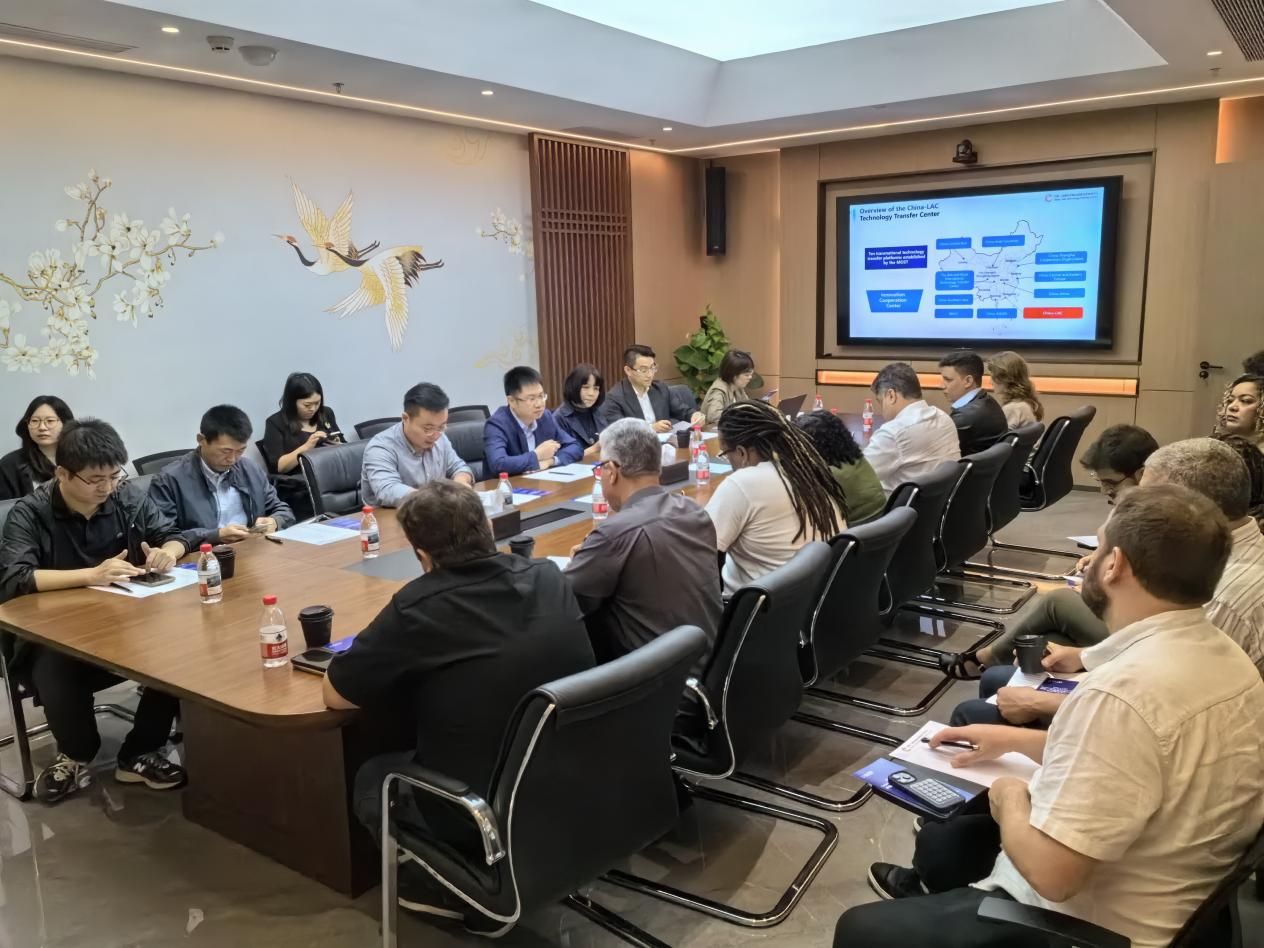
Conference Venue
Attending the meeting were representatives including Maria Lima, National Secretary in charge of Grassroots Building,Labour Party; Jorge Abreu, Deputy Mayor of Duque de Caxias, Rio de Janeiro State (representative of the Democratic Labour Party); Rinaldo Junior, Recife City Councillor and Parliamentary Party Leader; Rafael Pegado, National Chairman of the Socialist Youth League ; Tiago Paraiba, Financial Secretary of the Socialist Liberal Party; Zhou Chao, Director of the Fifth Bureau of the International Department Central Committee of CPC; Deputy Director Wang Yunxiang; Xie Yuhua, First-Level Researcher of the Foreign Affairs Commission of the CPC Dongguan Municipal of the Committee ; Gao Yun, Fourth-Level Researcher of the Foreign Affairs Office of the People's Government of Guangdong Province; and Chen Baiman, Executive Director of the China-LAC Technology Transfer Center.
The representatives engaged in in-depth discussions regarding cooperation between China and Brazil across multiple fields, reaching several consensus points. Firstly, uphold mutual benefit and reciprocity, promote the alignment of development strategies in areas such as energy transition, critical minerals, and artificial intelligence applications. Secondly, strengthen mutual learning among civilizations, enhance cultural identity through methods like organizing mutual visits and learning among scholars and jointly cultivating talents. Thirdly, deepen mutual trust in concepts, strengthen policy coordination and experience sharing in areas such as climate protection and rainforest governance, and jointly address global challenges. Currently, jointly building a China-Brazil community with a shared future for a more just world and a more sustainable planet is the common aspiration of the Chinese and Brazilian peoples, fully demonstrating the global influence and profound strategic value of China-Brazil relations.
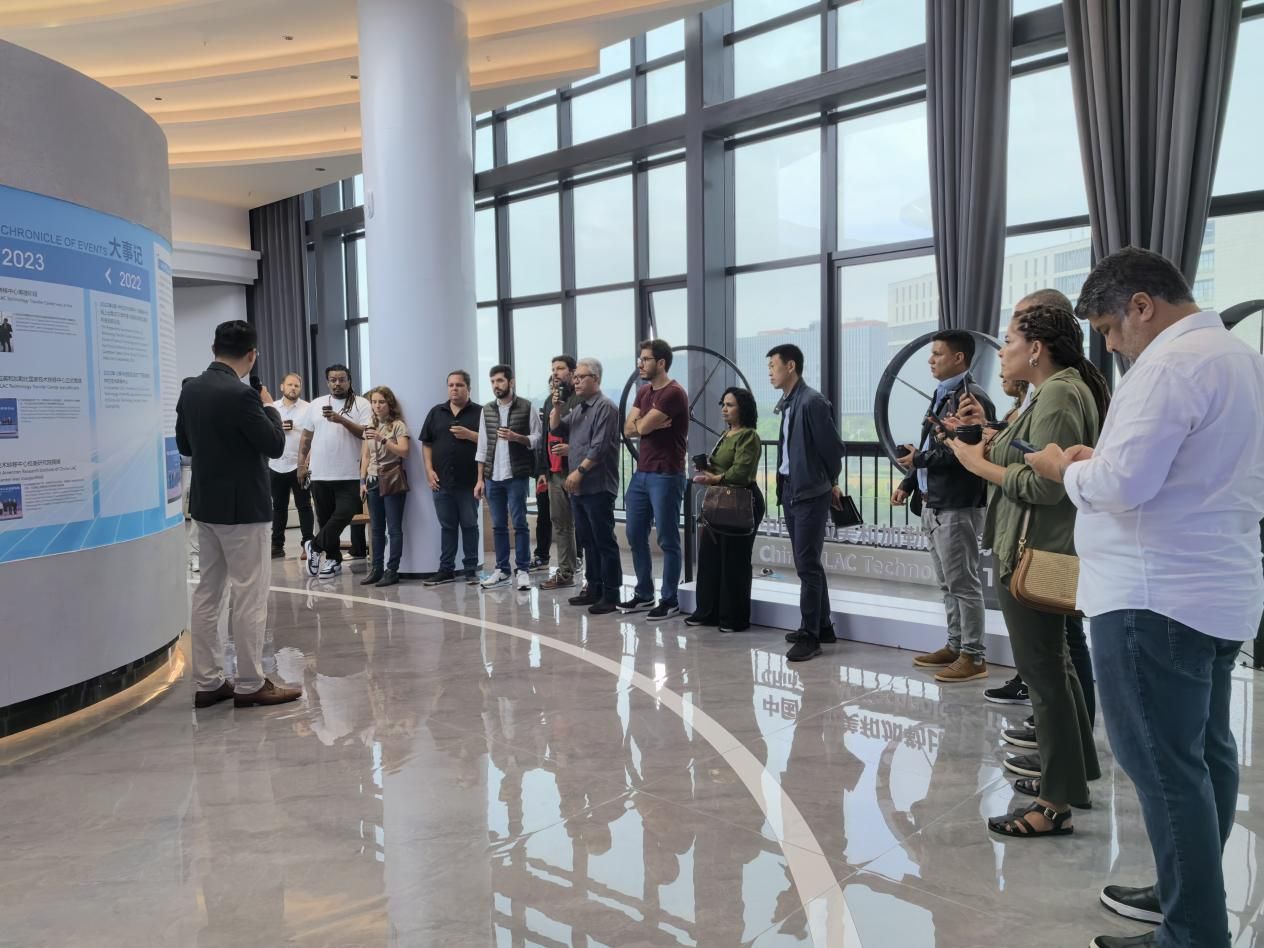
Tour of the Conference Venue
Chen Baiman stated that the China-LAC Technology Transfer Center always adheres to the core principle of extensive consultation, joint contribution, and shared benefits, actively promotes in-depth cooperation between China and Brazil in the fields of scientific and technological exchange, economic development, and technology transfer. In recent years, through measures such as hosting the China-Latin America Technolohy Cooperation Development Conference and FAPESP Week China and conducting investigations at Brazilian government departments, universities, and research institutions, it has continuously strengthened China-Brazil cooperation, playing a strategic hub role for information interaction, resource connectivity, and cultural mutual trust.
Hereafter, both sides will focus on important topics such as global governance, continuously strengthen friendly dialogue, actively explore all-round, broad-ranging, and multi-level cooperation directions and paths, and create a model of collaboration between major developing countries globally.
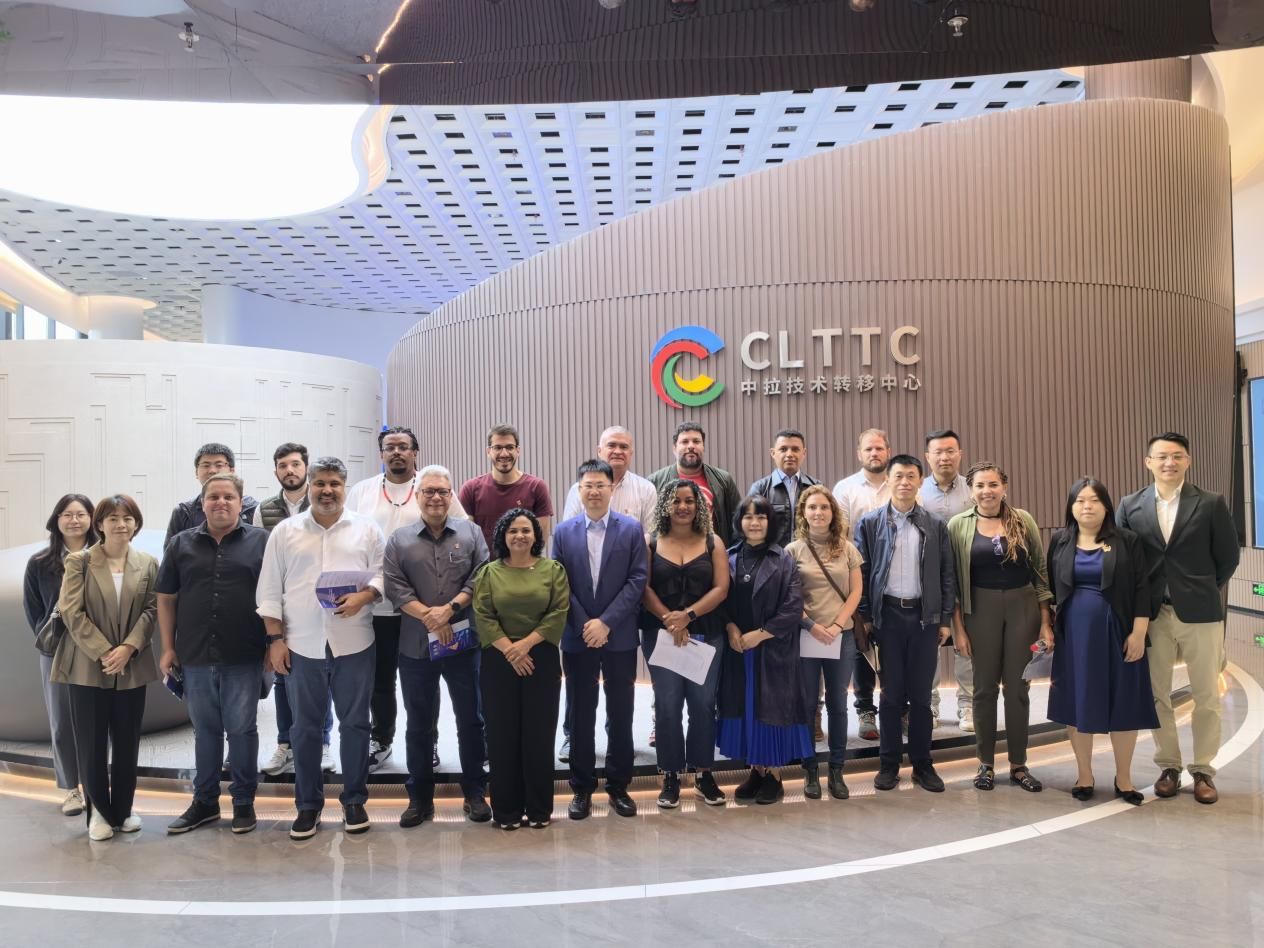
Group Photo